1. Meow or Miaow
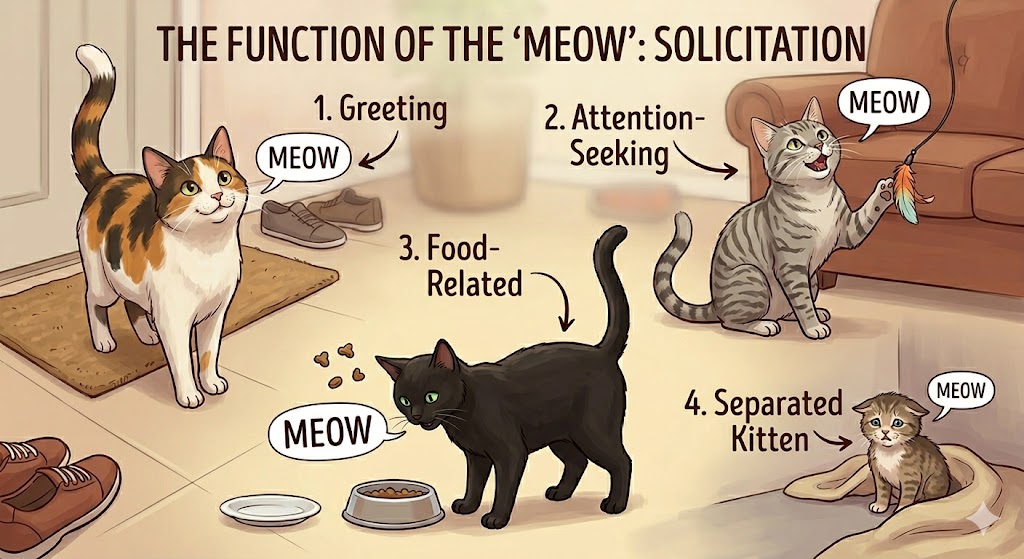
Cats make a widespread of meowing sounds, differing in intensity, length and frequency occurring in a wide selection of contexts with an oversized amount of variation accustomed to communicating various messages.
Cats tend to direct meows more to humans instead of other cats. Although meows are heard between mother-kitten exchanges, they’re rarely heard during domestic cat-cat interactions.
The function of the meow is commonly solicitation (greeting, attention, food related or when a kitten is separated from the queen). If the meow motivation is frustration (not having the ability to gain access outdoors or obtain food), the meow may be longer and more frequent.
2. Purr
Purring is the most recognised murmur sound with one among all time low pitch tones made by felines.
Purring is produced by muscular narrowing of the laryngeal muscle when the mouth is closed for the duration of respiration, it will be heard both during inhalation and exhalation, giving it a rhythmic feature which will be continued for extended periods.
Felines can adjust the volume at which they purr, depending on their emotional intensity, the most foremost changeable is the purr volume between individuals, with some purring at hardly audible levels whilst other purring loudly keeping owners awake night-time.
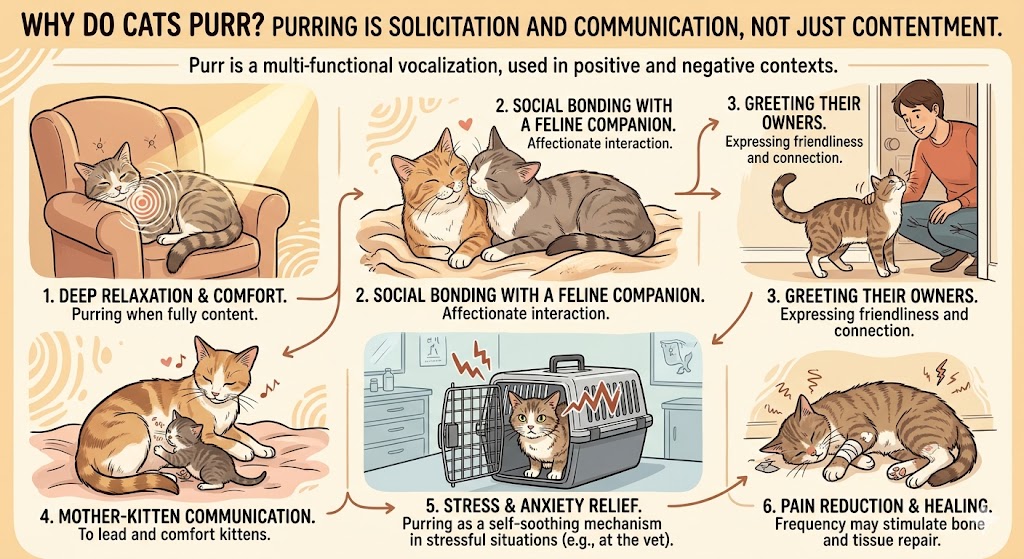
Cats purr in many situations – both positive and negative contexts. Queens purr whilst nursing kittens while kittens purr during nursing sessions. Cats also purr when resting or rubbing alongside a feline companion, when greeting their owners and when being stroked or groomed on an owner’s lap, it’s thought in such instances purring communicates contentment.
Listen to this video to hear a cat purr.
Veterinarians and pet parents have noticed that certain cats purr when they’re in pain and a few have seen queens purr during labour.
There isn’t sufficient evidence to conclude the function of purring during negative contexts, however it’s likely that purring in such situations have likelihood of self-healing functions and pain relief.
3. Trill/Chirrup
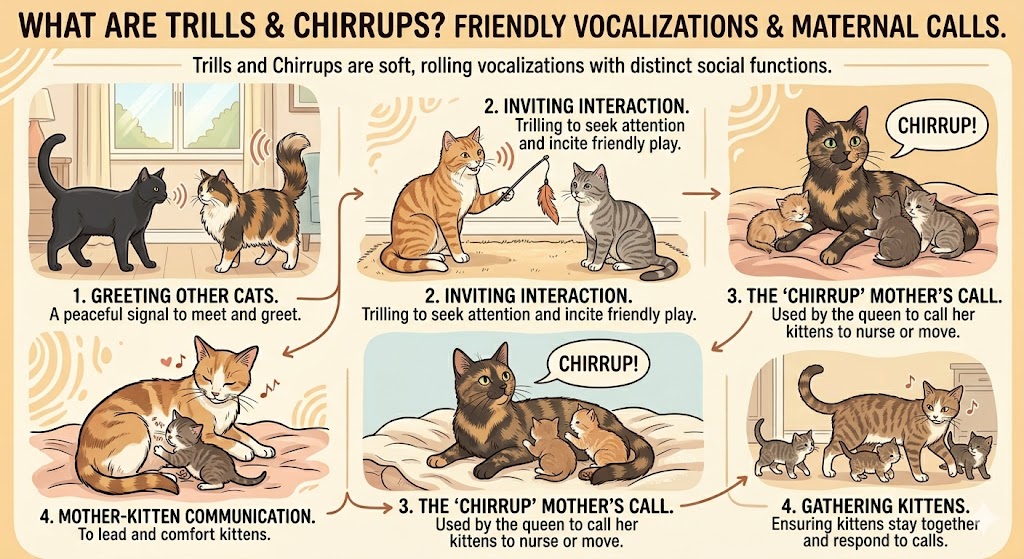
The trill’s function is to communicate greeting, getting attention and inciting friendly interactions with other cats. The chirrup form of the trill is used by the queen to call her kittens, however, also happens between adult cats.
Trills and chirrup are directed towards people and appears along with meowing. The Chirp high-pitched sound has also been thought to mimic bird or rodent chirp to entice prey.
Watch this cat trills at her owner when woken from a nap
4. Chatter/Chitter
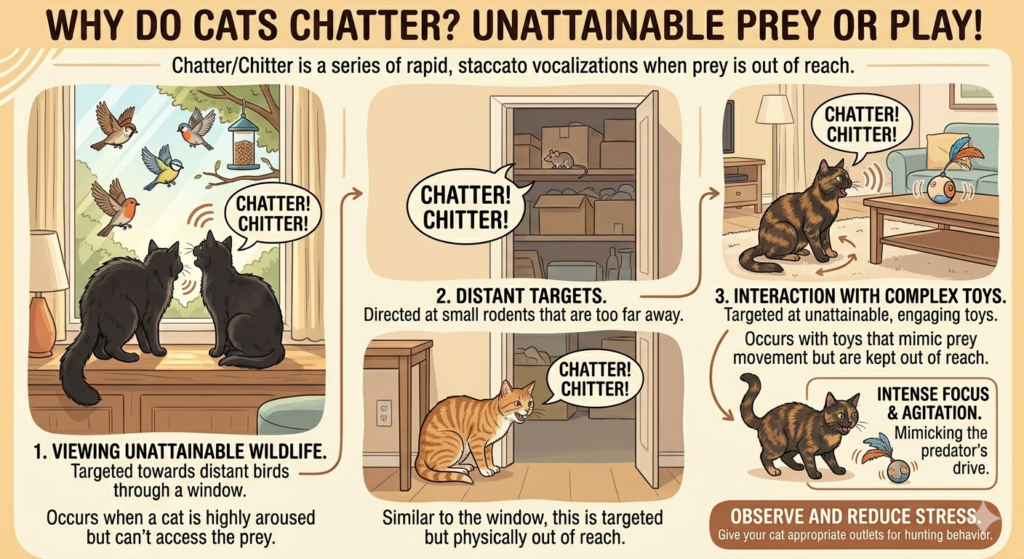
Cat chatter occurs when a cat is viewing prey that’s unattainable. It’s usually directed towards birds but may be targeted towards other prey and even toys. The clicking sound is produced in sequences with the jaw and a tensely open mouth.
No-one is certain the true function of this behaviour, however there are few theories comprised of signs of conflict of frustration in attaining prey, prey capture anticipation, impersonation of prey vocalizations and therefore the kill bite theory.
In this video a cat chatters during play with a feather toy.
5. Hiss
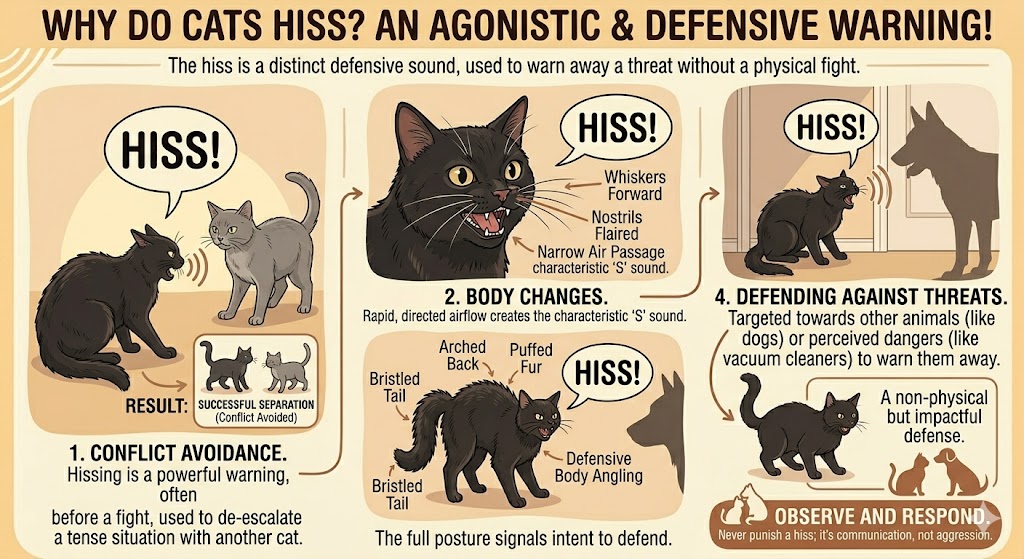
The hiss is identifiable because of its distinct sound. The hiss is a lengthy exhalation produced while a cat’s mouth is wide open with teeth exposed.
There’s slight variation between cats in the hiss sound made in comparison to meows, yowls and shrieks. The hiss sound is made in agonistic situations or defensive encounters to warn others and accompanied by changes to body posture.
6. Snarl
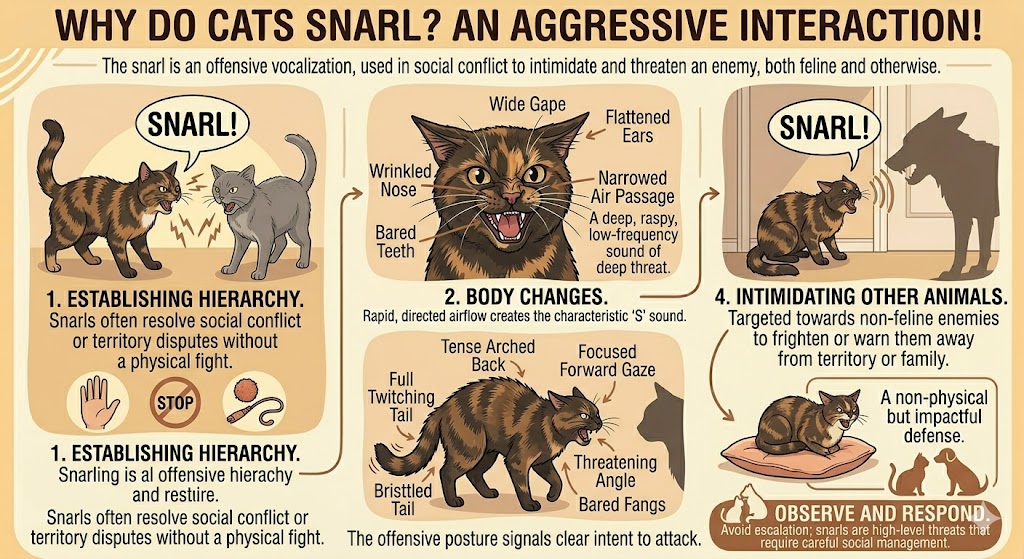
The Snarl sound happens during a fast inhalation. The phonation is harsh, loud, high-pitched vocalization produced with open mouth generally during active aggression or when in pain.
Snarls likewise employed in offensive and defensive interactions, both between cats and towards other animals to frighten or intimidate an enemy.
7. Shriek
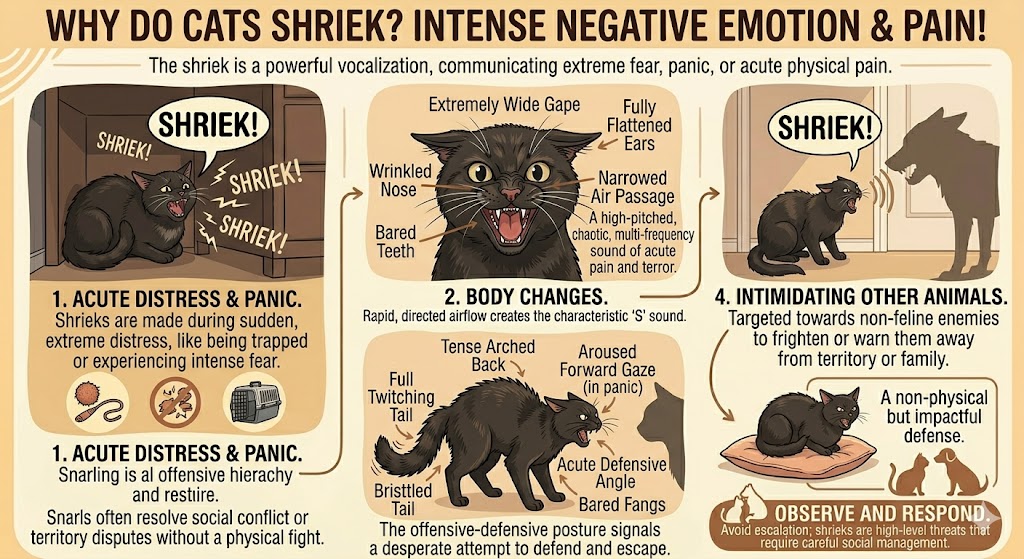
When a cat shrieks, it communicates intense negative emotion like fear and/or pain. If the threat intensifies by moving nearer, a feline may emanate a sudden loud shriek to startle the opponent and allow the cat a fast escape or attack (Brown and Bradshaw, 2014).
Pain shrieks are short intense cries of tense vowels depicted by a great strain of mouth plus throat and therefore the force of breath (Moelk, 1944).
Conclusion
Cats are great communicators and if we pay close attention to their vocalization, body language and facial expressions, we’ll realise they’re trying to converse with us and convey vital information about their overall health and wellbeing.